Nylon-Strumpfhosen 3er-Pack
3 Paare, 120g insgesamt plus Kartonhüllen
Strumpfhosen sind auf Verschleiß ausgelegt: Ein einziger Riss beendet die Lebensdauer des Paares. Milliarden werden jedes Jahr verkauft und praktisch keine werden gesammelt, da Nylon-Elastan-Mischungen keinen Recyclingweg haben.
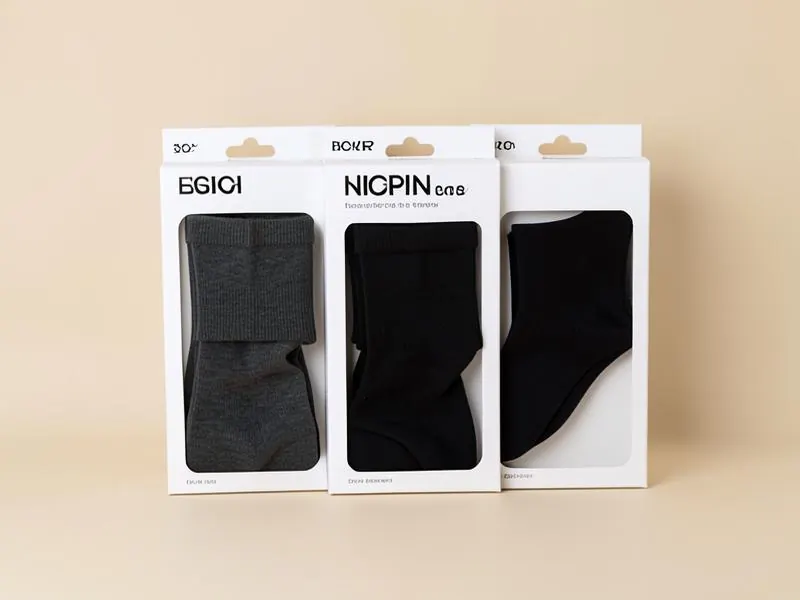
Materialaufschlüsselung
3 Komponenten- Nylon 6.6 Faser108g
- Elastan12g
- Polybeutel & Aufhänger6g
Herstellungs-Fußabdruck
Pro EinheitGeschätzter vorgelagerter Herstellungs-Fußabdruck pro Einheit, basierend auf durchschnittlichen Ökobilanzen für Kunststoffe.
Umweltfreundlichere Alternativen
- Laufmaschenresistente, dicke StrumpfhosenDichteres Gestrick übersteht deutlich mehr Einsätze.126gPlastik
- Woll- oder BaumwollstrumpfhosenNaturfaser, wärmer, reparierbar.0gPlastik
- Rücknahmesysteme wie von Swedish StockingsEinige Marken recyceln getragene Strumpfhosen zu Füllstoffen für Glasfasertanks.126gPlastik
Weitere Alternativen vorschlagen
Erhalten Sie 3 plastikärmere Optionen, in Echtzeit recherchiert.
Tippen Sie auf „Vorschlagen“, um frische Ideen von unserer KI-Recherche zu erhalten.
Quellen zu diesem Produkt
Begutachtete Studien und Berichte von Institutionen hinter den obigen Zahlen.
- The contribution of washing processes of synthetic clothes to microplastic pollution ↗De Falco, F., Di Pace, E., Cocca, M. & Avella, M. (2019) · Scientific Reports, 9, 6633
Measures microfibre release per wash for polyester, polypropylene and polyamide garments, the basis for our shedding notes.
- Environmental impact of textile reuse and recycling – A review ↗Sandin, G. & Peters, G. M. (2018) · Journal of Cleaner Production, 184, 353–365
Reviews 41 studies on textile reuse and recycling; shows reuse consistently beats recycling, and blended fabrics are rarely recycled fibre-to-fibre. Backs our low recycling odds for blends.
- Textiles and the environment: the role of design in Europe's circular economy ↗European Environment Agency (2022) · EEA Briefing
EU-level per-person consumption, water and land use of textiles, and the design decisions that drive them.
- Degradation Rates of Plastics in the Environment ↗Chamas, A., Moon, H., Zheng, J., Qiu, Y., Tabassum, T., Jang, J. H., Abu-Omar, M., Scott, S. L. & Suh, S. (2020) · ACS Sustainable Chemistry & Engineering, 8(9), 3494–3511
Open-access review that harmonises plastic degradation studies into a specific surface degradation rate, giving half-lives from 58 years for an HDPE bottle to 1,200 years for thick HDPE pipe. Peer-reviewed basis for how our decomposition windows scale with wall thickness and format.
- We need better data about the environmental persistence of plastic goods ↗Ward, C. P. & Reddy, C. M. (2020) · Proceedings of the National Academy of Sciences, 117(26), 14618–14621
Shows that popular persistence figures, including the widely repeated 450 years for a plastic bottle, cannot be traced to any measurement. This is why we give persistence as a range grounded in measured degradation rates instead of a single headline number.
- Ranking environmental degradation trends of plastic marine debris based on physical properties and molecular structure ↗Min, K., Cuiffi, J. D. & Mathers, R. T. (2020) · Nature Communications, 11, 727
Ranks PE, PP, PET, PS, PVC and nylon by measured degradation susceptibility and shows that thickness, crystallinity and additives shift estimated lifetimes by one to two orders of magnitude. Backs our practice of scaling persistence by format rather than by polymer alone.
- Pathways for degradation of plastic polymers floating in the marine environment ↗Gewert, B., Plassmann, M. M. & MacLeod, M. (2015) · Environmental Science: Processes & Impacts, 17(9), 1513–1521
Open-access review of the chemical routes by which PE, PP, PET, PS and PVC break down at sea, showing that carbon-backbone polymers such as PE and PP resist hydrolysis and depend on slow photo-oxidation. Explains why our persistence windows differ by polymer as well as by format.
- Monitoring polymer degradation under different conditions in the marine environment ↗Beltrán-Sanahuja, A., Casado-Coy, N., Simó-Cabrera, L. & Sanz-Lázaro, C. (2020) · Environmental Pollution, 259, 113836
Field study exposing PET, LDPE, HDPE, PP and PS in seawater, sediment and beach sand for nine months; conventional polymers lost under a few percent of their mass. Direct measured evidence for the very slow marine degradation behind our long persistence windows.
- Alteration and progressive degradation of plastic waste in a Polish operational landfill analysed over 60 years ↗Redko, V., Wolska, L., Cieślak-Piotrowicz, A. et al. (2024) · Communications Earth & Environment, 5, 563
Excavated polyethylene bags and film buried for up to six decades in a working landfill and found only partial surface oxidation, not disappearance. Real-world confirmation that landfilled film persists far beyond the lifetimes often quoted.