Kitchen6 min read
Buy one knife. Keep it sharp for twenty years.
A knife block is one of the highest-waste corners of the kitchen. One good chef's knife, cared for properly, replaces almost all of it.
A knife block is one of the highest-waste corners of the kitchen. One good chef's knife, cared for properly, replaces almost all of it.
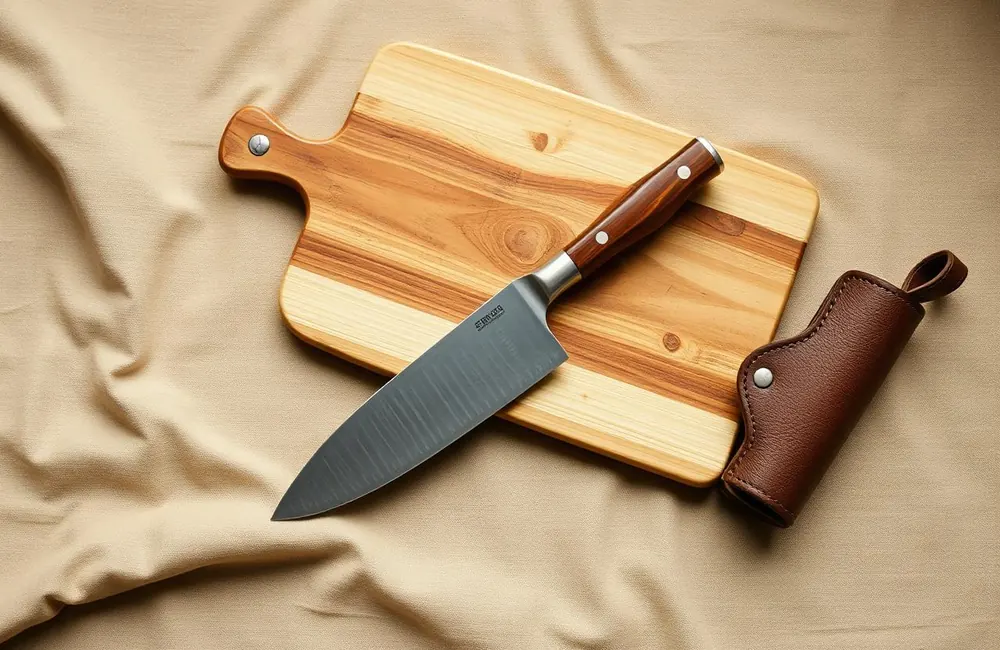
Most knife blocks are a slow-motion landfill. Seven or eight stamped-steel blades, plastic handles, a polypropylene block, and a serrated bread knife nobody bought on purpose. Within five years half of it is dull, rusting, or buried in a drawer. One properly chosen chef's knife, sharpened on a schedule, replaces almost all of it.
A single 8-inch chef's knife in carbon or high-carbon stainless steel will handle 95% of home cooking. Pair it with a small paring knife and, optionally, a serrated bread knife. Three blades, total. Skip the block, a magnetic strip on the wall keeps them visible and dry.
“A sharp knife sharpened often is a tool for life. A dull knife replaced every two years is a subscription to landfill.”
A typical home knife block weighs about 280g of mixed plastic and bonded steel on our own scales, a combination no kerbside system separates. A magnetic strip and three good knives, properly cared for, last decades. The blades themselves are pure steel and fully recyclable if they ever do retire.
New audits, fresh swaps, and the occasional graph that surprised even us. Unsubscribe whenever you like.