Kitchen7 min read
Cookware that outlives you
Non-stick coatings flake, warp and end up in landfill. Three pans in honest materials replace a whole cupboard.
Non-stick coatings flake, warp and end up in landfill. Three pans in honest materials replace a whole cupboard.
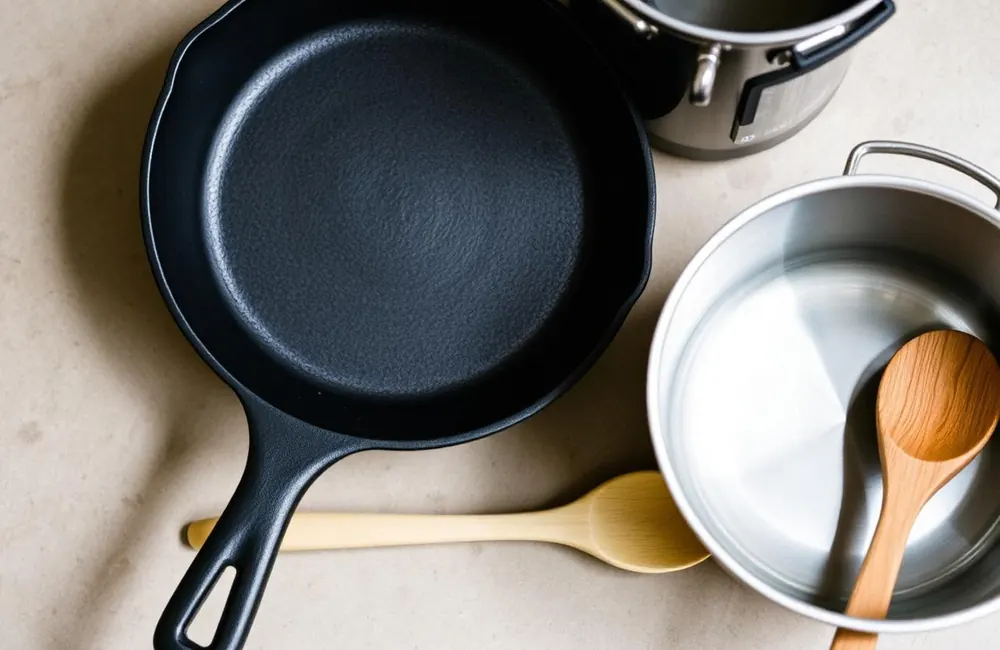
Non-stick pans are replaced when the coating fails, not when the metal does; a scratched or overheated PTFE surface has been shown to shed Teflon micro- and nanoplastic particles, and a single crack can release thousands of them. Cast iron and stainless steel pans, by contrast, get passed down, and the embodied energy of making them is amortised across a lifetime, not a lease.
PTFE coatings break down at high heat and release fluorinated compounds, and damaged coatings release particles into food. Beyond the health story, the pans themselves are not recyclable, the coating contaminates the underlying aluminium. Every replaced pan is binned.
Cast iron's reputation for being fussy is exaggerated. Wipe, oil, heat. Five minutes a year, with use as the actual maintenance. A well-seasoned skillet releases an egg as cleanly as Teflon, and gets better, not worse, every decade.
New audits, fresh swaps, and the occasional graph that surprised even us. Unsubscribe whenever you like.
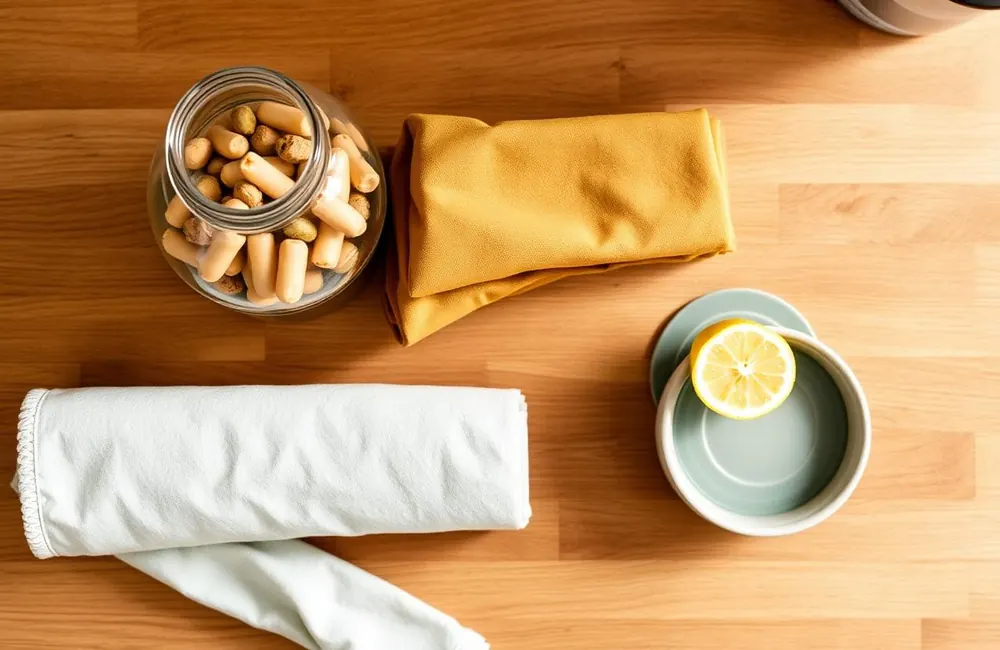
Cling film is the most-used and least-recycled item in most kitchens. Three replacements cover almost every use.
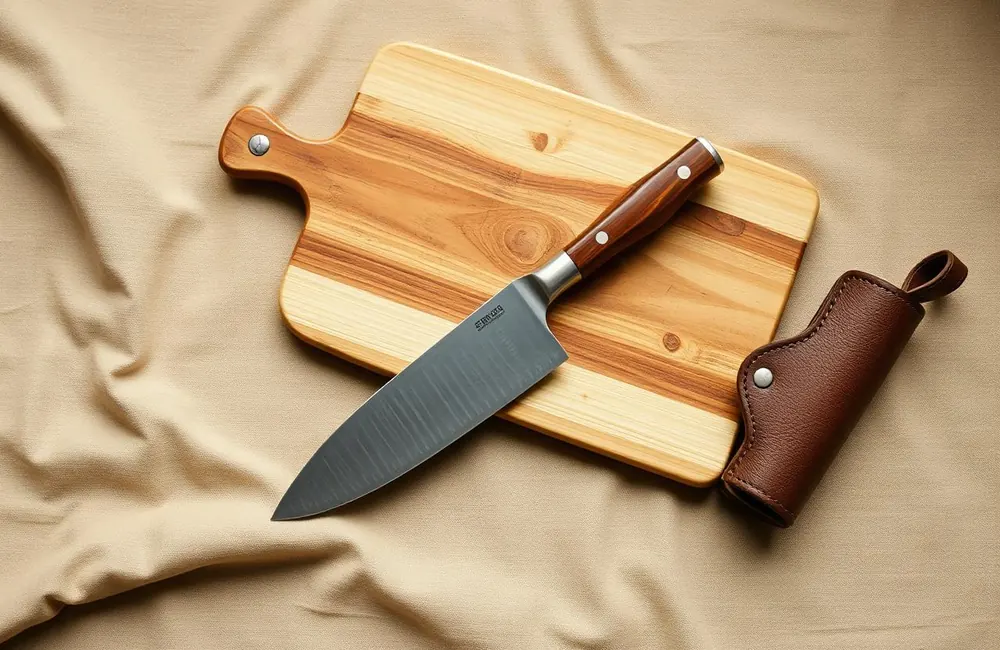
A knife block is one of the highest-waste corners of the kitchen. One good chef's knife, cared for properly, replaces almost all of it.