Sponge vs Scrubber
Plastic sponges shed fibres straight down the drain as you scrub. A plant fibre brush does the job without that.
The yellow-and-green sponge is polyurethane foam with a nylon or polyester scouring pad glued to it. Scrubbing is abrasion, and abrasion of plastic against a pan produces exactly what you would expect.
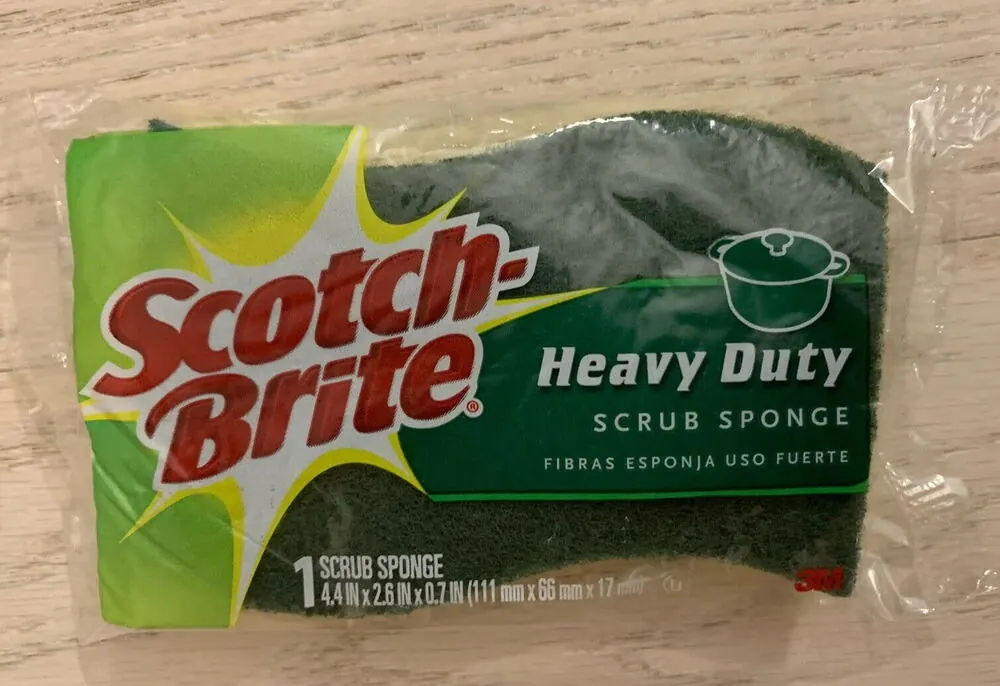
Plastic kitchen sponge
- Plastic / use
- 0.5g
- Lifespan
- ~1 month
- Recyclability
- 0%
- Decomposes
- 200-600 yr
- +Cheap
- +Soft side and scour side in one
- +Holds a lot of suds
- −Sheds microplastic fibres down the drain
- −Stays damp and grows bacteria
- −Replaced roughly monthly, straight to landfill
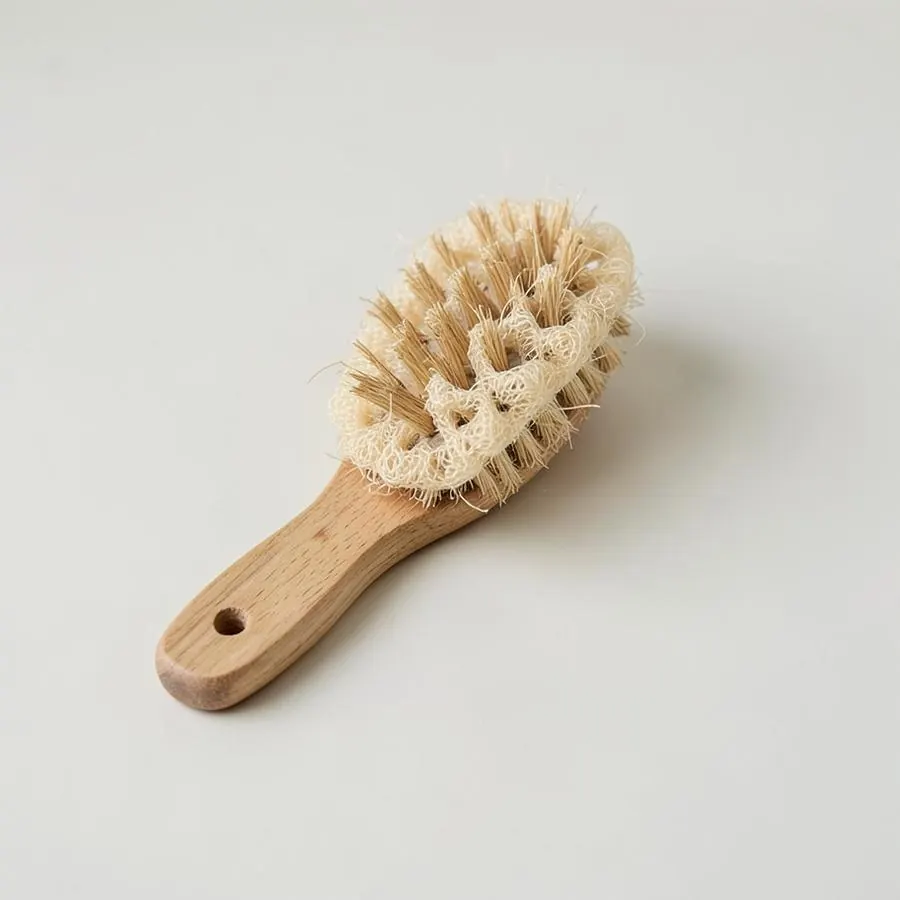
Plant fibre scrubber
- Plastic / use
- 0g
- Lifespan
- 3-6 months per head
- Recyclability
- 95%
- Decomposes
- ,
- +No fibres into the water
- +Dries out, so far more hygienic
- +Composts at end of life
- −Stiffer on delicate coatings
- −Needs a replaceable head to last
- −Holds fewer suds
Breakdown times are modelled ranges from lab and field studies, not measured lifetimes. Real conditions (sunlight, heat, water, landfill) change them a lot, and plastic breaks into microplastics rather than disappearing. See our method.
The differences
| Sponge | Scrubber | |
|---|---|---|
| Material | Polyurethane foam + nylon pad | Wood, sisal, coconut or loofah |
| Microplastic shedding | Millions of fibres per sponge | None |
| Lifespan | ~1 month | 3-6 months (head replaceable) |
| Dries between uses | No, holds moisture | Yes |
| End of life | Landfill | Compostable apart from the staple |
| Cost per year | ~$20 | ~$18 |
Why one wins
Laboratory work on melamine and polyurethane sponges found a worn sponge releases millions of microplastic fibres over its life, all of it going down the sink and through a treatment plant that is not designed to catch particles that small.
Sponges are also a hygiene problem. Studies of used kitchen sponges find bacterial densities comparable to a toilet, because foam holds moisture and food in a way an open-structure brush does not.
A wooden-handled brush with plant fibre bristles, or a loofah, dries between uses, sheds nothing plastic and composts at the end apart from the metal staple.
Cost is a wash: replacement brush heads cost about the same per year as replacing sponges monthly.